

Bold women who defy limits and conquer mountains.
22/05/2023
Do you love adventures and challenges? Can you imagine climbing a mountain over 6,000 meters high wearing your traditional skirt and hat? Well, that's exactly what the cholitas climbers of Bolivia do. They are a group of Aymara women who have shattered stereotypes and become an example of empowerment and bravery.
<<The term "cholitas" is often used derogatorily to refer to indigenous women in Bolivia. However, the work of a group of 14 women who defy sexist beliefs in the region has given a new value to that word.>>

The cholitas climbers are a recent phenomenon that began in 2015 when a group of women working as cooks or porters in mountain camps decided to try their luck and climb Huayna Potosí, a summit of 6,088 meters near La Paz. They successfully achieved it and since then, they have not stopped conquering other mountains, such as Acotango, Parinacota, Pomarapi, and Illimani, all of which are over 6,000 meters high.
But their greatest feat was in 2019 when five of them reached the summit of Aconcagua, the highest mountain in South America and one of the most challenging in the world. They were the first Aymara women to accomplish this, and they did it wearing their traditional attire: the skirt, the aguayo (shawl), the manta (blanket), and the hat. It was a symbol of their identity and pride.
 Cholitas climbing in the snow
The cholitas climbers not only engage in this sport for fun or passion but also for empowerment. They want to demonstrate that indigenous women can achieve whatever they set their minds to and that they don't have to give up their culture or way of dressing. They also aim to inspire other women to pursue their dreams and overcome the obstacles they encounter.
In this blog, we will tell you everything about the cholitas climbers of Bolivia: how they came together, how they prepare, the challenges they face, and their plans for the future. We invite you to get to know these extraordinary women who have made history and who teach us that nothing is impossible with determination and courage.
The cholitas trepadoras (climbing women) originated in 2015 when Alicia Quispe, the first woman wearing a traditional skirt (pollera) to reach the summit of Huayna Potosí (6,088 meters), invited her companions to follow her example. She noticed that the men in her community who were involved in tourism worked as guides for tourists who came to explore the mountains of Bolivia, while the women were left behind to take care of the visitors' luggage or perform kitchen tasks.
"Women working in tourism in Bolivia used to be unheard of. When we started climbing the mountains, men would tell us, 'Your fingers will freeze, it's very dangerous, we don't want to take responsibility.' Many criticized us, but after climbing different mountains, we have proven ourselves with our actions," recalls Quispe during a video call, wearing her traditional attire and helmet.

Since then, they have climbed six other mountains, including Aconcagua (6,962 meters), the highest peak in the Americas, and their goal for 2023 is Mount Everest (8,848 meters).
The cholitas climbers have formed a supportive and empowered team that aims to inspire other women to push their limits and value their culture. They also have a deep respect for nature and their ancestors, whom they thank for allowing them to reach the summits. The cholitas trepadoras are an example of courage, determination, and pride for Bolivia and the world.

Before climbing a mountain, the cholitas prepare and get ready with great care and discipline. They train their physical and mental endurance, check their equipment and clothing, and gather information about the weather conditions and ascent routes. They also perform ancestral rituals to seek permission and protection. With faith, courage, and joy, the cholitas trepadoras of Bolivia embark on the adventure of conquering the most challenging summits of the continent.
 Ritual of Preparation with Coca Leaves
Before starting their climb, they undertake a series of preparations that include:
In summary, the cholitas climbers of Bolivia prepare themselves physically, technically, and spiritually to face the challenges of climbing a mountain, showcasing their bravery, perseverance, and deep connection with nature.
 Cholitas before embarking on their feat
The cholitas escaladoras of Bolivia face several obstacles during their mountain expeditions. Some of the main challenges they may encounter include:
Despite these obstacles, they demonstrate their strength, determination, and courage in facing them, and they continue to break barriers and pave the way for other women in the world of mountaineering.
 Cholitas showing their unity and strength
The cholitas trepadoras of Bolivia have several long-term plans aimed at strengthening their position and promoting gender equality in mountaineering. Some of these plans include:
Their goal is to continue pushing boundaries and demonstrating that women can achieve great things in the world of mountains.
 Proud of their country
The cholitas climbers of Bolivia are an inspiring example of courage, determination, and resilience. They have challenged gender stereotypes and conquered mountains, showing the world that women are capable of achieving great feats. Their indomitable spirit and love for nature drive them to overcome obstacles and reach new heights. The cholitas trepadoras are a symbol of empowerment and a reminder that there are no limits for those who dare to dream big. Their legacy will endure, inspiring future generations to pursue their own dreams and challenge established norms. In a world where gender equality is a fundamental goal, the cholitas trepadoras teach us that the sky has no limits, and together we can conquer any summit.
 Cholita defying altitude and cold
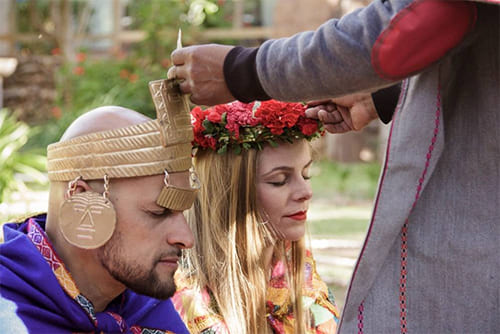
Andean Weddings
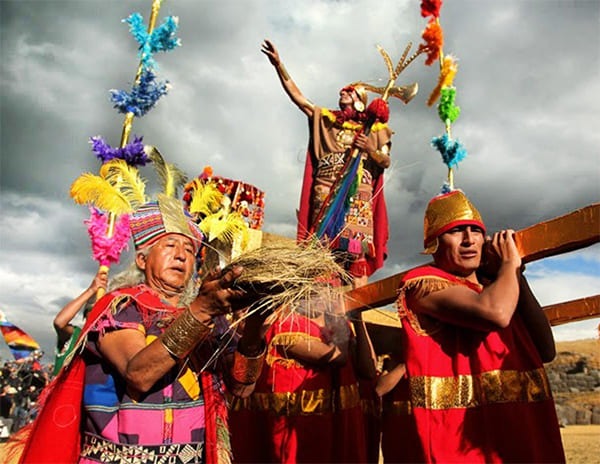
“INTI RAYMI”, the millenary feast of the Sun.
Corpus Christi: A Cusco festivity full of tradition
Lima, Paracas, Nazca, Arequipa, Puno, and Cusco - 14 Days This package is a comprehensive itinerary designed to explore the main tourist attractions of Peru.
An 11-day, 10-night trip is an ideal package for you to discover the country's main tourist attractions.

9 days, an ideal package to explore the main tourist attractions of the country.
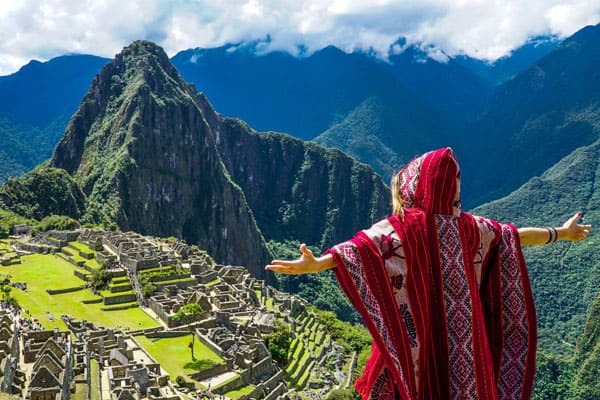
This tour package and its itinerary take us to the main tourist spots in the Andean Region. The city of Cuzco, known as "the navel of the world and the empire of the Incas."